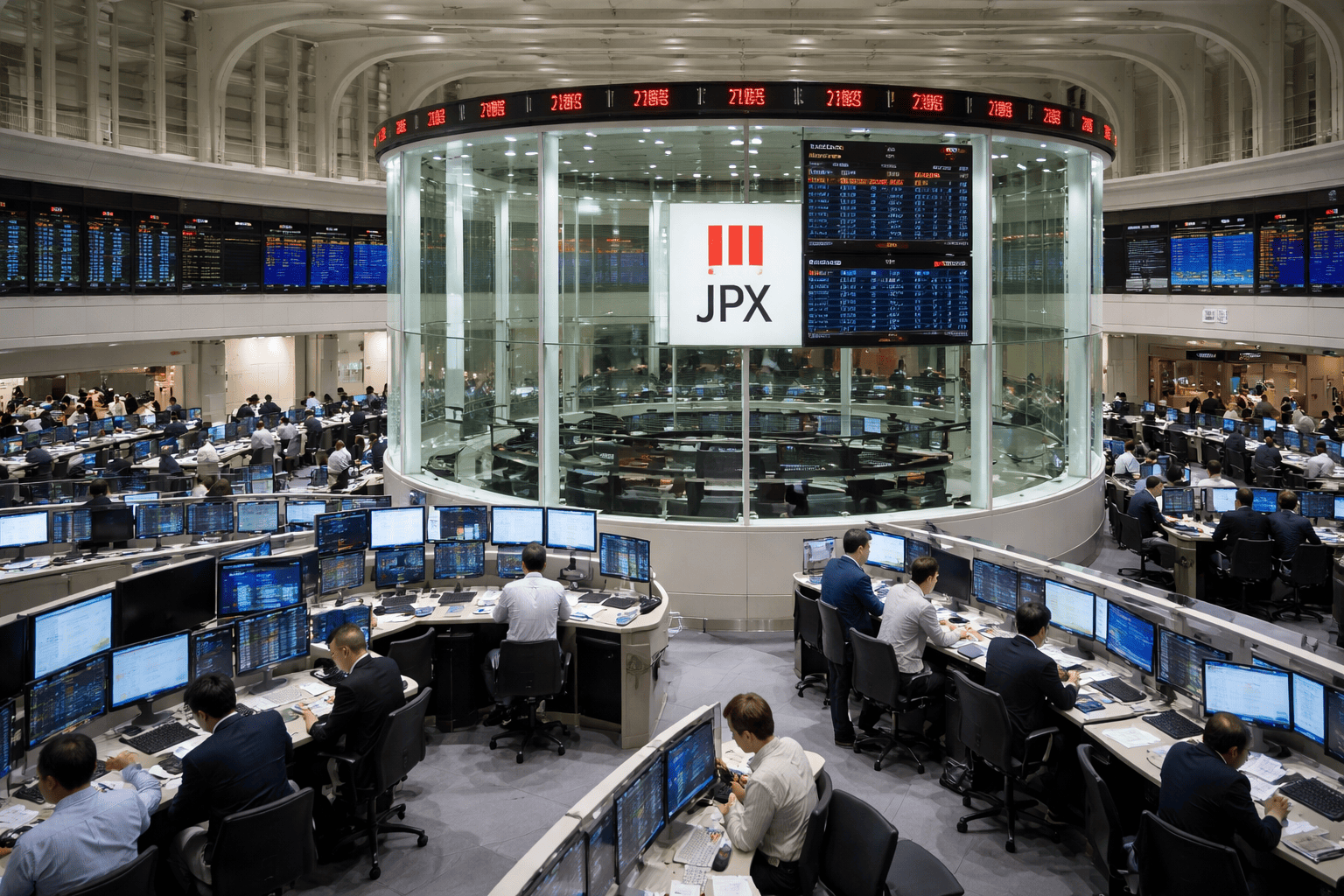
The Nikkei 225 Index extended its recent decline on Monday, slipping to around 65,325 as investors weighed stronger-than-expected Japanese economic data against rising geopolitical tensions and a more hawkish Federal Reserve. The index is now roughly 10% below its highest level of the year, reflecting a broad risk-off tone across Asian markets.
Strong Japanese data fuels BoJ rate hike bets
Fresh data released over the past week showed Japan's industrial production rose 3.6% year-on-year in July, with a monthly gain of 0.1% that beat expectations for a 0.7% contraction. Retail sales also surprised to the upside, climbing 4% in July versus the 3.2% consensus estimate. These figures suggest the Japanese economy is holding up better than many had anticipated, which has led market participants to increase the likelihood of another Bank of Japan rate hike later this year.

The stronger data follows Tokyo's inflation reading, which came in above forecasts and reinforced the view that the BoJ may need to tighten policy further. As a result, Japanese government bond yields have remained elevated, adding pressure on equities. Investors will now look to the upcoming S&P Global manufacturing and services PMI readings for additional clues on the economy's momentum.
US-Iran tensions and oil price risk
Geopolitical risk has also weighed on the Nikkei. The United States conducted limited strikes on Iranian rocket launchers near the Strait of Hormuz, and while the attacks were restrained, Iran has signaled it may retaliate. An escalation could push Brent crude toward $90 per barrel and West Texas Intermediate toward $85, which would have significant implications for Japan, a major importer of oil that relies heavily on the Strait of Hormuz for its energy supplies.
Higher oil prices would likely raise input costs for Japanese manufacturers and could dampen consumer spending, adding another headwind for the equity market.
Jackson Hole aftermath and US data focus
Last week's Jackson Hole Symposium also left a hawkish imprint. Kevin Warsh's comments underscored that US inflation remains above the Federal Reserve's 2% target, and he emphasized the central bank's commitment to bringing it down. Following those remarks, traders have increased their expectations for a Fed rate hike in December, a move that would strengthen the US dollar and potentially weigh on Japanese exporters.
This week, the Nikkei will likely react to key US economic releases, including the nonfarm payrolls report and the ISM manufacturing and services PMIs. A strong jobs number could solidify the case for tighter Fed policy, while a weak print might ease those concerns.
Technical outlook: support levels in focus
From a technical perspective, the Nikkei 225 has broken below its 50-day moving average and is approaching a critical support zone near 64,653. The Relative Strength Index (RSI) and MACD indicators are both pointing lower, suggesting that momentum remains bearish. If the index fails to hold above that support, the next target could be the psychological 65,000 level, with further downside possible if selling pressure intensifies.
Investors will be watching whether the index can stabilize around current levels or if a deeper correction is underway. The combination of BoJ tightening expectations, geopolitical uncertainty, and a hawkish Fed creates a challenging environment for Japanese equities in the near term.
This article is for informational purposes only and does not constitute financial advice.