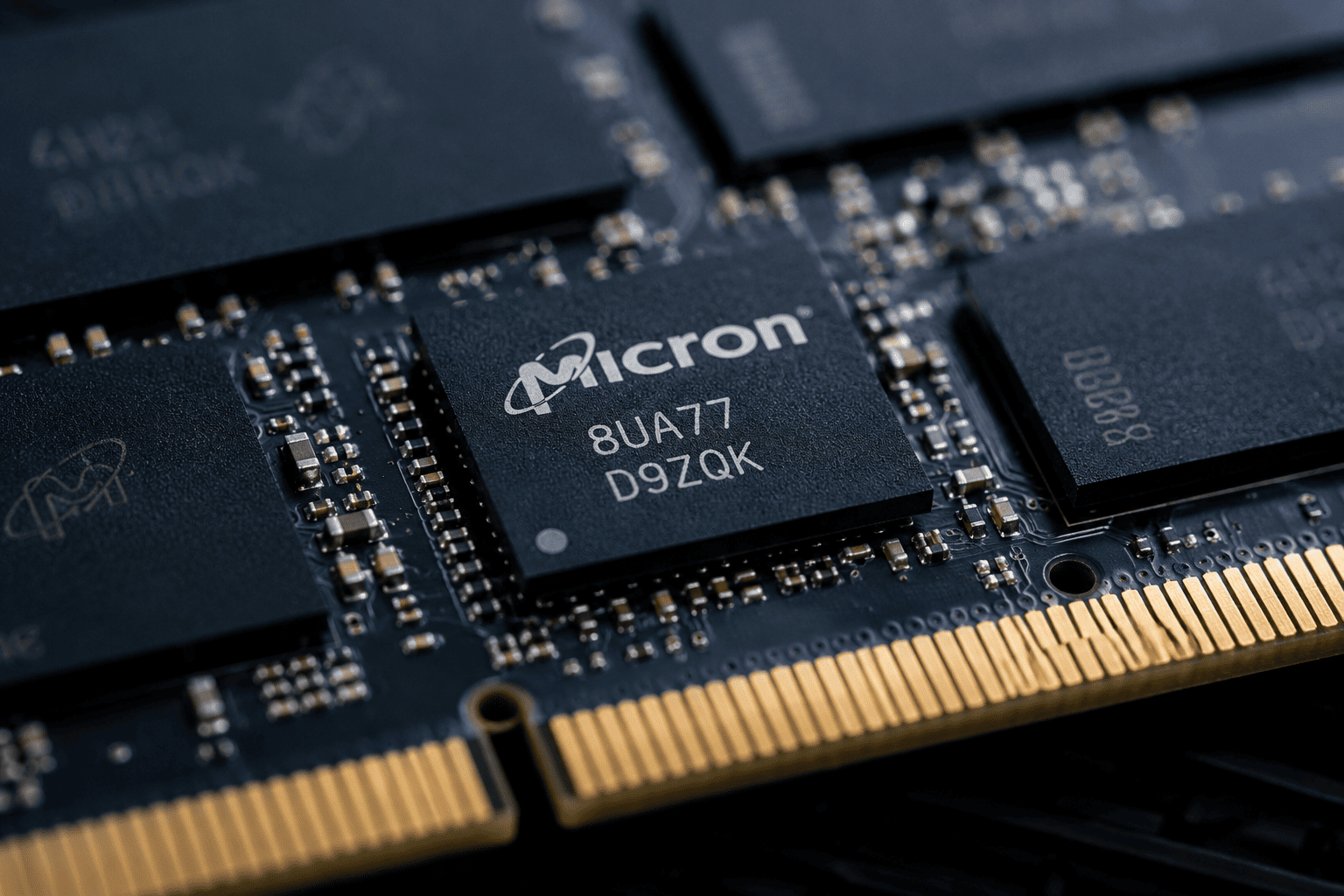
Micron Technology's shares have entered a technical bear market, dropping from a year-to-date high of $1,253 in June to around $878. This decline aligns with a broader sell-off in memory stocks, yet several fundamental factors suggest the downturn could present an opportunity for long-term investors.
Memory Sector Growth Remains Robust
Despite concerns about an AI bubble, the memory sector's growth is accelerating. Micron reported over $54 billion in fourth-quarter revenue, driven primarily by its DRAM business, surpassing analyst expectations and its own guidance. Management projects first-quarter revenue to exceed $60 billion, with consensus estimates around $61.7 billion—a 352% increase year-over-year. For the full year, analysts expect $275 billion, followed by $318 billion next year.
These figures are particularly impressive for a company founded in 1978. Micron's long-term contracts with clients provide clear visibility into near-term revenue. Gross margins also expanded to 86.8% last quarter, a trend that may continue.
Share Repurchase Program Set to Expand
Micron has been reducing its share count through buybacks, repurchasing $2 billion in the last quarter. However, these buybacks have been modest for a company of its size. The limitation stems from the CHIPS Act, which restricted buybacks for companies receiving federal funds. Those restrictions expire in December, and Micron has signaled plans to repurchase over $35.6 billion in shares. This program should boost earnings per share by reducing outstanding shares.
The $35.6 billion figure may be conservative, given Micron ended the quarter with $73 billion in cash and short-term investments.
Valuation Appears Attractive
Micron's valuation metrics suggest the stock is undervalued. Its trailing twelve-month price-to-earnings ratio stands at 11.64, while the forward non-GAAP PE is just 4.98. On a GAAP basis, the multiple is 5.0. In simple terms, if an investor bought Micron today with no growth, it would take about five years to break even, compared to over 22 years for Nvidia.
Micron also scores well on the rule-of-40 metric, combining 256% revenue growth with a 63% net income margin to yield 320%.
Technical Support Holds
On the daily chart, MU stock has slipped below an ascending trendline that connected lows since August 6. However, it remains above the 200-day moving average, which has provided robust dynamic support. This technical level could help the stock bounce back later this year as investors rotate back into AI-related names.
While the bear market may unsettle some, the combination of strong fundamentals, a massive buyback plan, and attractive valuation suggests the sell-off could be a gift for patient investors.
This article is for informational purposes only and does not constitute financial advice.