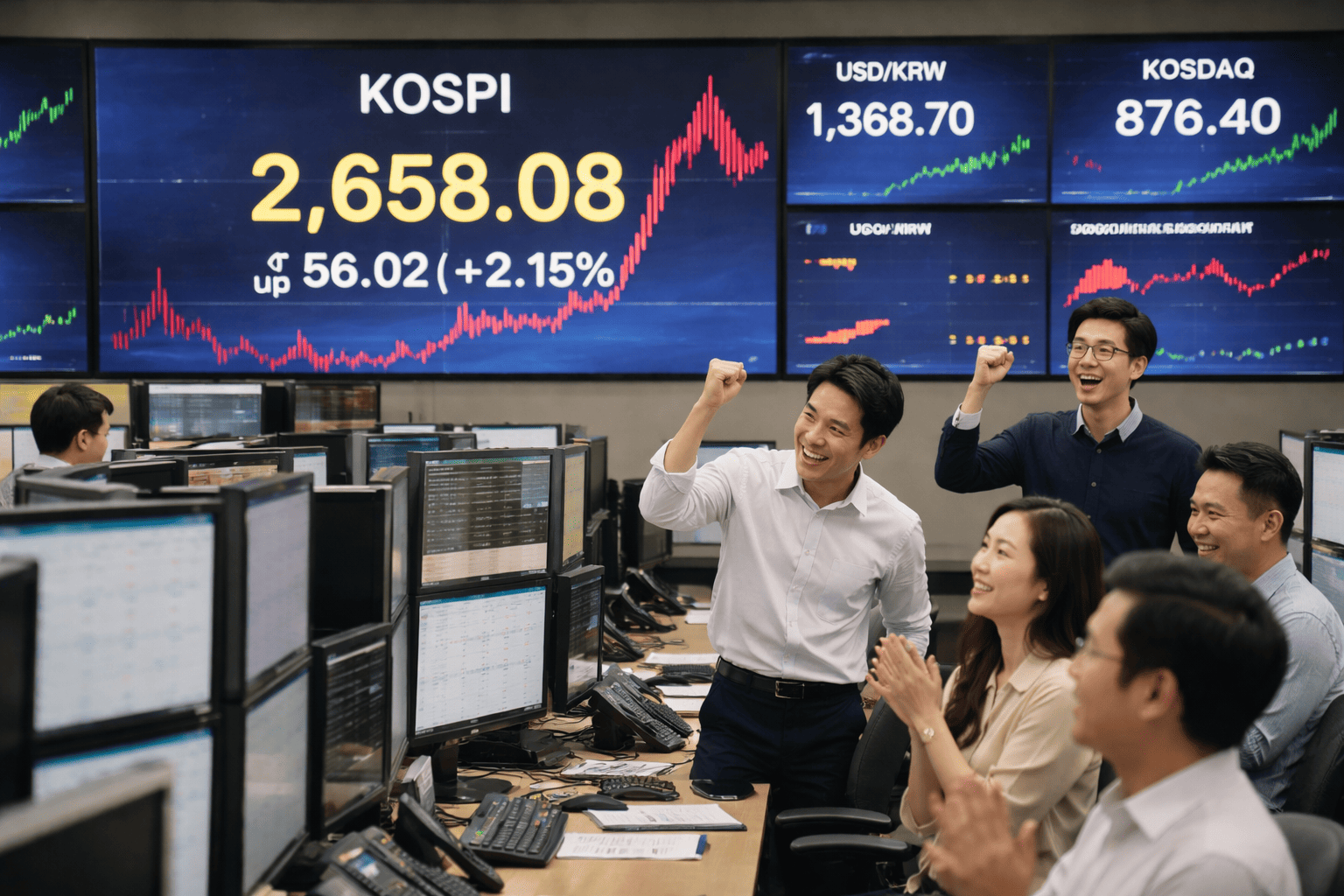
South Korea's Kospi Index surged more than 4% on Friday, staging a sharp rebound from a volatile week that saw it touch 7,060, its lowest level since May 20. The index remains in a local bear market, having fallen 20% from its 2025 peak. The rally was led by heavyweight tech stocks, but several structural risks suggest caution is warranted.
Samsung and SK Hynix Lead the Charge
The primary catalyst for the Kospi's bounce was a strong performance from its two largest constituents. Samsung Electronics jumped 6.29%, while SK Hynix rose 2.8% and SK Square gained 7.3%. The rebound aligns with a broader recovery in memory chip stocks, following gains in U.S. peers Micron, Sandisk, and Western Digital on Thursday.

SK Hynix's momentum is also tied to its landmark American Depositary Receipt (ADR) listing on the Nasdaq, which raised $26.5 billion from U.S. investors. The offering was reportedly seven times oversubscribed, marking the largest foreign debut in U.S. history. However, history suggests that such hype can be fleeting. Similar oversubscribed IPOs, including SpaceX, Circle Internet, and Figma, initially surged before retreating below their offer prices. A pullback in SK Hynix's ADR could spill over to its Seoul-listed shares, potentially reversing recent gains.
Other major South Korean stocks also participated in the rally. Samsung Electro-Mechanics climbed 6.36%, while Hyundai Motor, LG Energy Solution, Samsung Biologics, and Samsung Life Insurance each rose more than 5%.
Key Risks Facing the Kospi
Despite the sharp rebound, the Kospi faces several significant headwinds. First, the rally remains narrowly concentrated in two companies within the same sector—memory chips. While this has driven the index higher, it also creates vulnerability. If sentiment toward semiconductors shifts, the entire index could suffer a sharp reversal.
Geopolitical tensions in the Middle East add another layer of risk. The U.S. and Iran have resumed hostilities after President Trump declared a ceasefire over, raising the possibility of an escalation that could push oil prices higher. South Korea, as a major energy importer, would face increased costs, weighing on its economy and corporate earnings.
Foreign investor sentiment is also turning cautious. Data shows that overseas investors sold $12.6 billion worth of South Korean stocks in June, suggesting a shift toward distribution. Additionally, domestic retail investors have taken on substantial leverage to participate in the market rally. During downturns, leveraged positions are often liquidated quickly, accelerating sell-offs.
Technical Outlook Points to Potential Weakness
From a technical perspective, the Kospi's recent price action aligns with the distribution phase of the Wyckoff Theory, following a prolonged markup phase. The index remains below the lower boundary of its ascending channel and has fallen beneath its 50-day moving average. These signals suggest that the current volatility may precede a markdown phase, particularly if leveraged positions unwind.
Investors should monitor the performance of SK Hynix's ADR and broader geopolitical developments closely. For more context, see our coverage of SK Hynix's $26.5B Nasdaq debut and the escalating U.S.-Iran tensions.
This article is for informational purposes only and does not constitute financial advice.