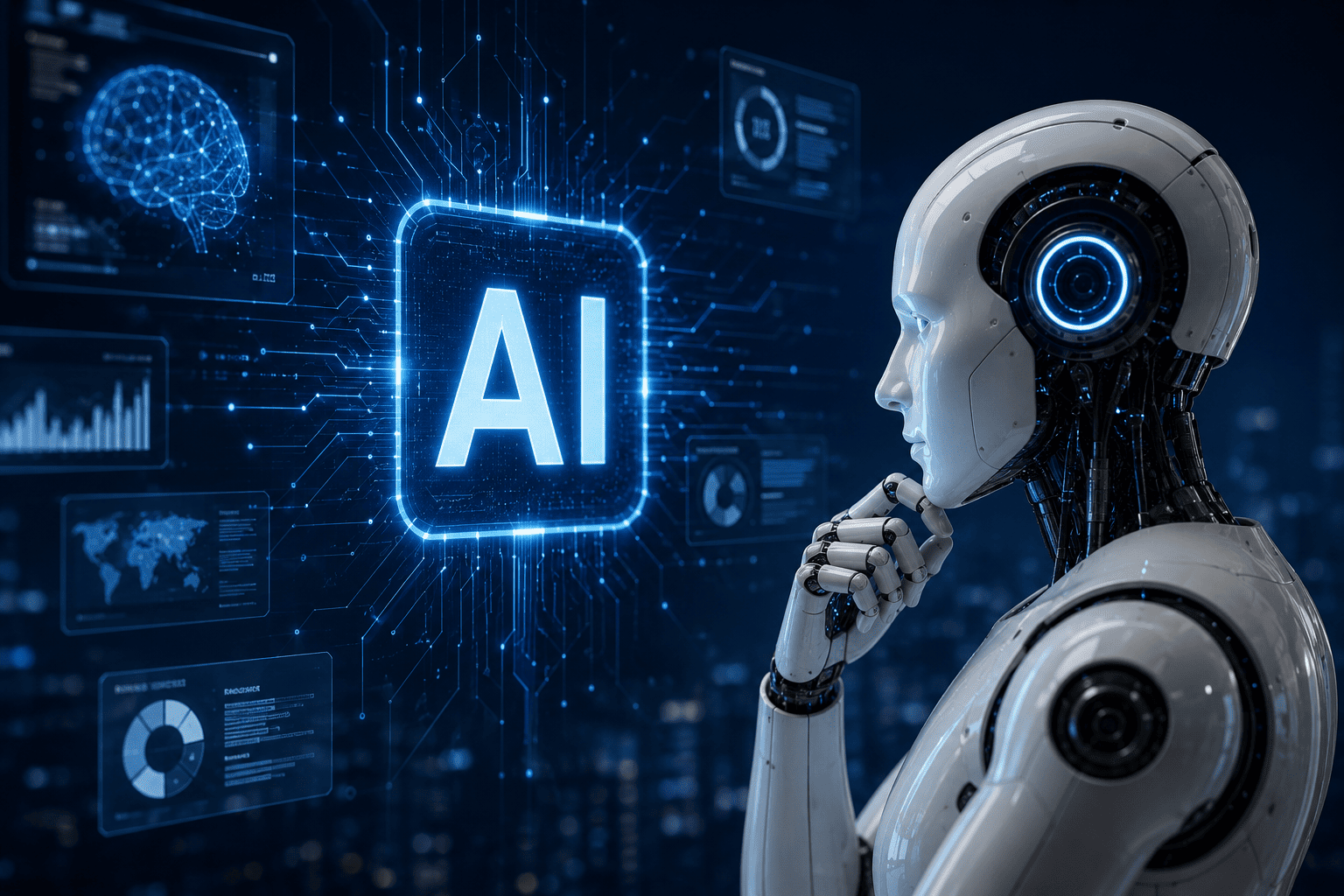
Artificial intelligence is increasingly embedded in financial markets, from hedge fund strategies to retail trading apps. But as AI tools become more accessible, a critical question looms: can investors truly trust a machine with their capital?
Bruce Keith, CEO and co-founder of InvestorAI, addressed this on the latest episode of Zero Sum, arguing that AI can significantly enhance investing—but only when deployed for the right tasks. He cautioned against using general-purpose chatbots for buy or sell recommendations, noting that these models are designed to retrieve information, not forecast market movements.
Purpose-built AI vs. general chatbots
Keith distinguishes between large language models (LLMs) like ChatGPT and purpose-built investment models. LLMs excel at summarizing news or explaining past price action, but they lack the ability to identify emerging patterns or predict breakouts. InvestorAI took an unconventional route by adapting computer vision—technology used in facial recognition and autonomous vehicles—to analyze market data. By converting vast datasets into visual formats, their AI can spot complex patterns that human analysts or text-based models might miss.
This distinction is crucial as more retail investors turn to AI chatbots for financial advice. The real edge, Keith argues, lies not in finding entry points but in knowing when to exit. "No one tells you when to get out," he said, emphasizing that risk management often determines long-term success.
AI for short-term, humans for long-term
Keith believes AI is particularly effective for short-term trading decisions, roughly two to three months out. For longer horizons, human judgment remains superior because it can incorporate qualitative factors and work with incomplete information. This suggests a hybrid approach: machines process vast amounts of data, while humans oversee the bigger picture.
Transparency and performance metrics
Investors evaluating AI-driven strategies should demand more than flashy returns. Keith recommends examining win rate, beat rate, average returns, and drawdowns. A strategy that wins often can still lose money if its losses are large. "If what you're looking for is consistency, consistency of output, consistency of outperformance, then the question has to be how consistent has this thing been?" he said.
Regulators are also playing catch-up. Keith advocates for a principles-based approach rather than rigid rules, but stresses that responsibility cannot be outsourced to machines. Financial firms must maintain human oversight and robust risk controls.
The future: AI-driven execution
Looking ahead, AI may move beyond generating signals to executing trades automatically. Keith notes that automated execution is already emerging, with AI deciding when to trade, pause, or stop after losses. However, he insists that risk controls must be built into the system before investors commit significant capital.
Keith's own market calls reflect this balance: he is bullish on Indian infrastructure and JSW Steel, bearish on US leadership, and his wildcard is "listening to the youth." For a deeper dive, watch the full Zero Sum episode.
As AI continues to reshape investing, the key takeaway is clear: technology can enhance decision-making, but transparency and human accountability remain non-negotiable. For more on AI-driven portfolio management, see MoneySimpler's new AI platform and expert advice on AI trade volatility.
This article is for informational purposes only and does not constitute financial advice.