Intel Corporation (NASDAQ: INTC) saw its shares climb 4% in premarket trading Thursday after Bank of America upgraded the semiconductor giant from Underperform to Buy, lifting its price target to $135 from $96. The upgrade reflects growing conviction that Intel is well-positioned to capitalize on rising demand for central processing units (CPUs) driven by the emergence of agentic artificial intelligence systems.
BofA Raises Server CPU Market Forecast Significantly
Following discussions with industry executives and customers at the BofA Global Tech Conference, the brokerage revised its global server CPU market estimate upward to more than $170 billion, compared to a prior forecast of $125 billion. The new outlook implies nearly five-fold growth and a compound annual growth rate (CAGR) of 37% between 2025 and 2030.

According to BofA analysts, the rise of agentic AI—systems capable of executing complex tasks with minimal human intervention—is expected to create substantial opportunities for both traditional x86 chipmakers and companies developing ARM-based processors. As part of the same analysis, the firm also raised its price target on Advanced Micro Devices (NASDAQ: AMD) to $560 from $500, implying roughly 24% upside from Wednesday's close.
Alphabet Order Validates Intel Foundry Progress
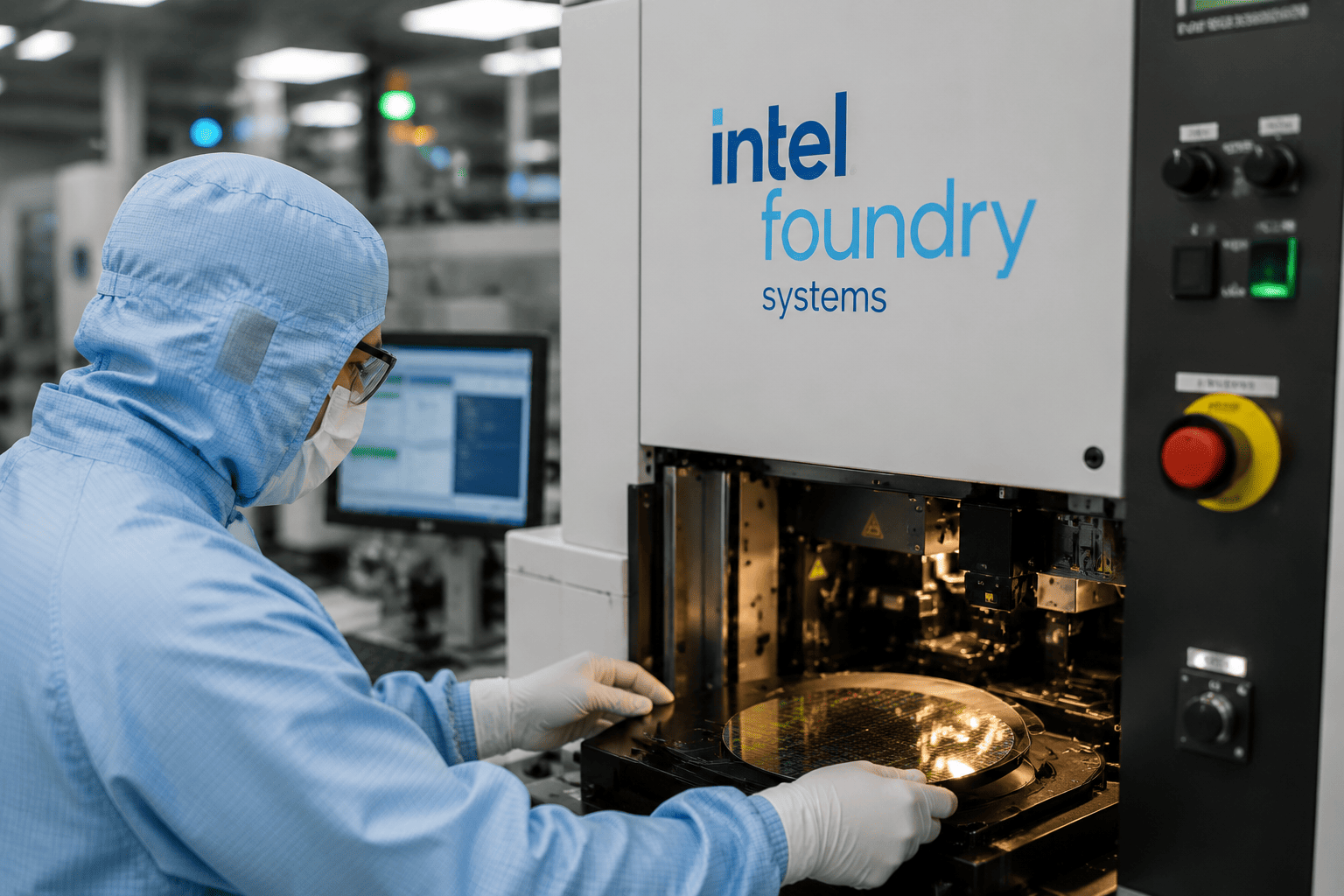
Separate industry developments have added to the bullish narrative surrounding Intel's long-term strategy. A report from The Information revealed that Alphabet Inc. (NASDAQ: GOOGL) has committed to manufacturing Tensor Processing Units (TPUs) through Intel Foundry, with a three-million-unit order planned for 2028. That volume is estimated to represent approximately 50% of Google's projected TPU output for that year.
The decision appears driven by both technological and supply chain considerations. Intel's Embedded Multi-die Interconnect Bridge (EMIB) packaging technology has reportedly achieved yield rates above 90%, positioning it as a viable alternative to Taiwan Semiconductor Manufacturing Company's (NYSE: TSM) CoWoS packaging platform, which faces capacity constraints amid strong AI-related demand. Google's Gemini AI platform now serves more than 900 million monthly active users, increasing the company's need for computing capacity and manufacturing diversification.
For more context on how major tech earnings impact chip stocks, see our analysis: Oracle Earnings: A Key Bellwether for Intel and AMD Stock Performance.
Foundry Momentum Broadens Beyond Alphabet
Industry interest in Intel's foundry business appears to be expanding. Nvidia Corporation (NASDAQ: NVDA) is reportedly evaluating Intel's 18A process node for a future multi-die graphics processor, while Tesla Inc. (NASDAQ: TSLA) has committed to Intel's 14A process technology for custom silicon used in its Terafab AI computing complex in Austin, Texas.
These developments are occurring amid broader efforts by U.S. technology companies to reduce supply chain dependence on Taiwan and increase domestic semiconductor production. For a look at how other companies are benefiting from AI-driven demand, read: SanDisk Surges on AI Memory Demand, Analyst Price Target Hikes.
Execution Risks Remain Key for Investors
Despite the positive developments, execution remains a central consideration for investors. Intel must successfully deliver its process technology roadmap and manufacturing capabilities at scale to convert potential opportunities into sustained revenue growth.
Recent financial results have supported the bullish narrative. Intel reported first-quarter 2026 revenue of $13.58 billion, exceeding consensus estimates by more than $1.1 billion, with strength in its Data Center and AI division contributing to the outperformance. For more on the broader chip landscape, see: Intel Stock Surges on Reports of Google, Nvidia Foundry Wins; Shares Test Key Moving Average.
This article is for informational purposes only and does not constitute financial advice.