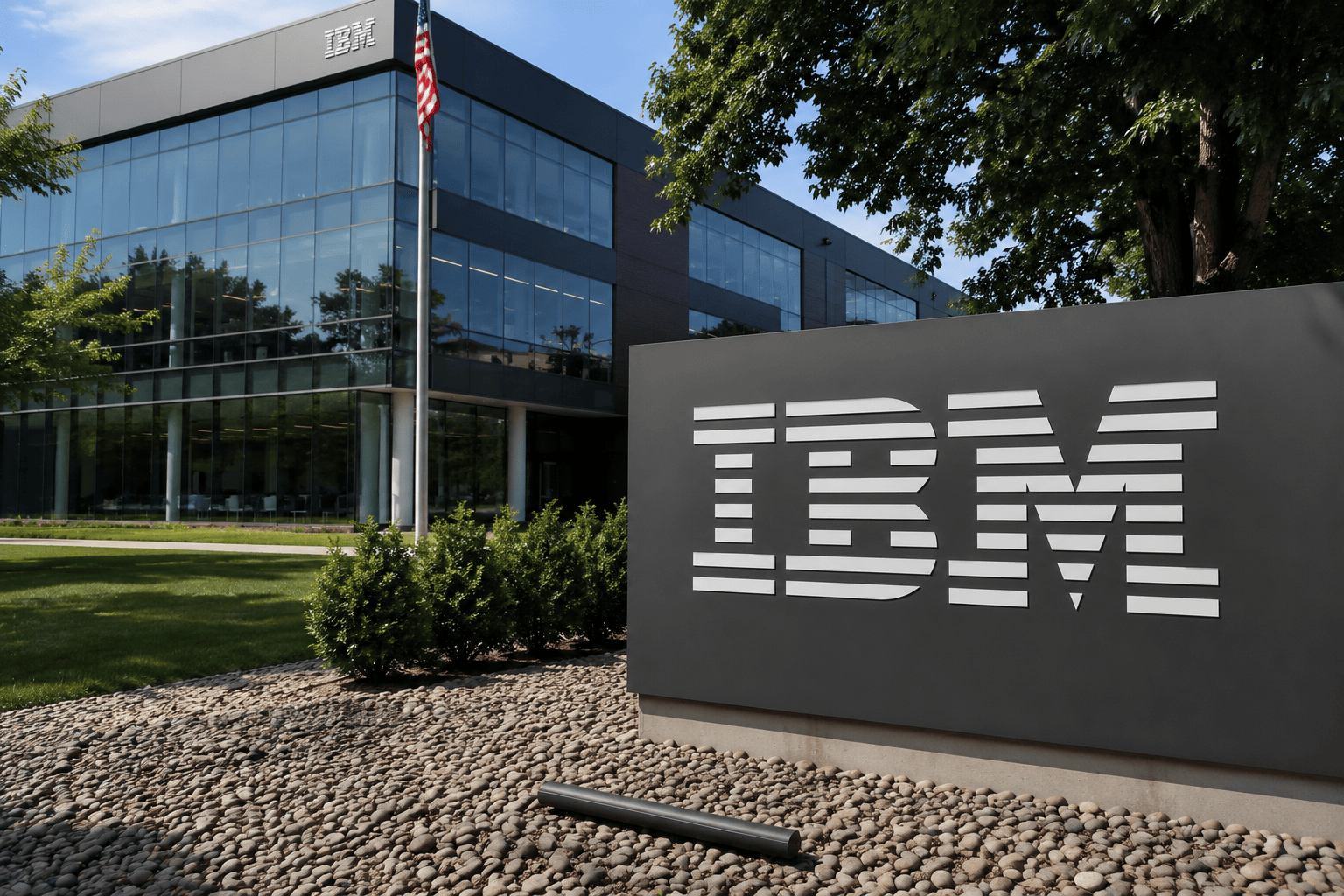
IBM shares declined more than 5% in premarket trading on Thursday, even after the technology giant reported third-quarter results that topped analyst expectations. The stock's reversal came as investors focused on management's cautious remarks about corporate spending on artificial intelligence.
The company posted adjusted earnings of $2.95 per share, surpassing the consensus estimate of $2.86. Revenue reached $17.10 billion, ahead of the expected $16.82 billion, and grew approximately 5% year-over-year. Net income rose to $2.19 billion, or $2.30 per share, from $1.74 billion, or $1.84 per share, in the same period last year.

IBM also raised its full-year free cash flow forecast, now expecting an increase of more than $1 billion, up from its July projection of about $1 billion. The company maintained its 2026 constant-currency revenue growth outlook of 4% to 5%.
Despite the upbeat numbers, shares initially surged in after-hours trading before reversing course during the earnings call. CEO Arvind Krishna's comments about enterprise AI investment returns appeared to dampen enthusiasm. He noted that larger enterprises are becoming more conscious of the true return on investment from their AI spending, and some are worried that spending may be out of control with no real return.
Krishna emphasized that the productivity benefits of AI remain significant, but his remarks highlighted a growing trend of scrutiny across the enterprise technology sector. This follows a similar pattern from the second quarter, when IBM shares tumbled after Krishna attributed weak performance to customers shifting spending toward AI-related hardware amid supply concerns.
On the positive side, IBM's software business delivered stronger-than-expected results, with revenue rising 8.3% to $7.80 billion, beating estimates of $7.62 billion. Hybrid cloud sales increased 11%, and transaction processing software revenue grew 9%, recovering from an unexpected decline in the prior quarter. CFO James Kavanaugh told Reuters that delayed software deals from the second quarter were beginning to close.
IBM now expects annual software revenue growth of about 7% to 8%, up from its previous forecast of 6% to 8%. Kavanaugh noted that roughly 25% of transaction processing revenue came from deferred deals, while the remaining 75% was net new business.
Infrastructure revenue rose 4.2% to $3.71 billion, supported by 31% growth in distributed infrastructure, which includes servers and storage systems. That growth helped offset weakness in IBM's Z mainframe business.
The improved software outlook and higher free cash flow forecast offered support for IBM's operating performance, but Krishna's comments underscored the broader market's concern about AI spending efficiency. IBM shares are down 14% this year, reflecting ongoing investor caution.
This article is for informational purposes only and does not constitute financial advice.