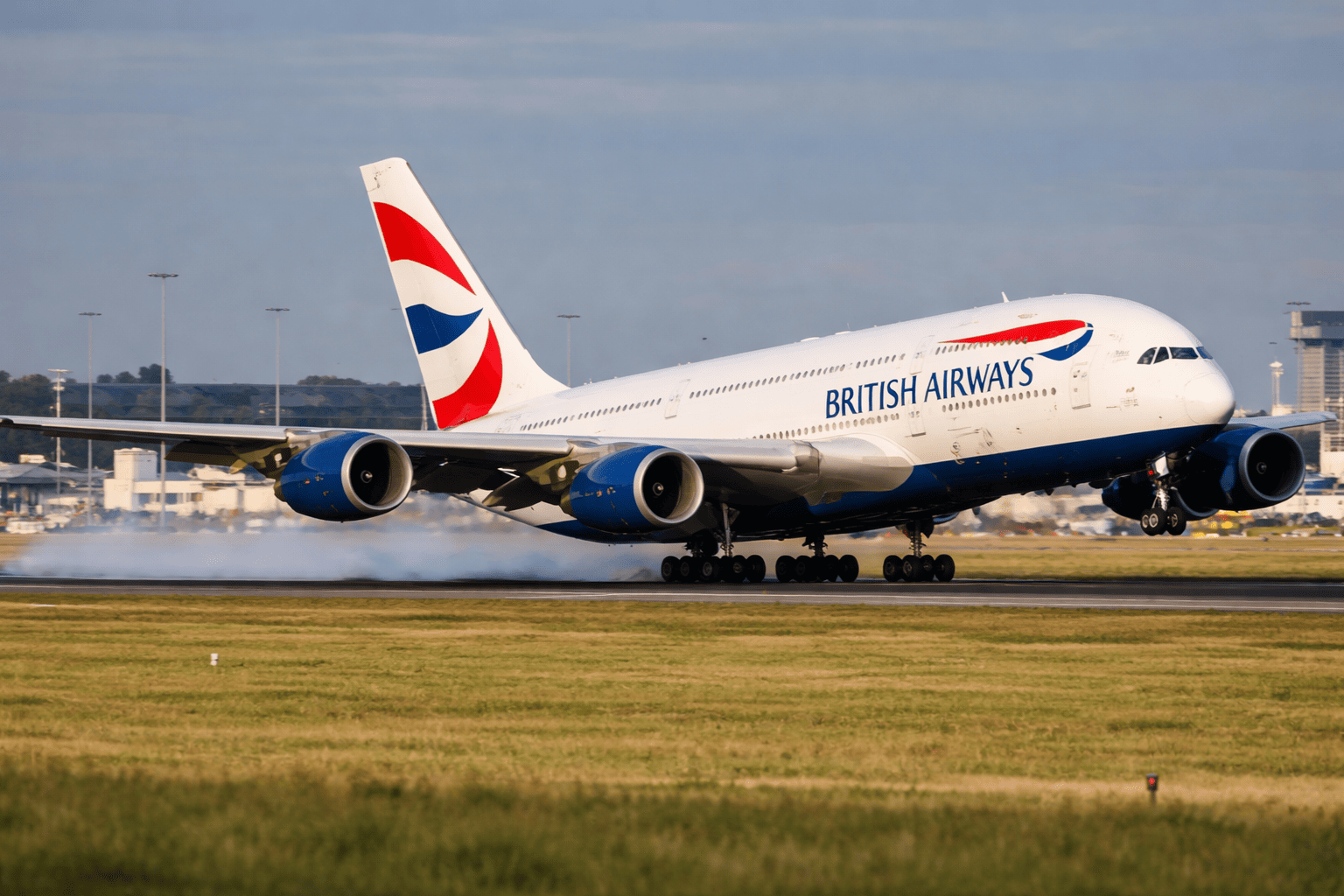
International Airlines Group (IAG), the parent of British Airways, Aer Lingus, and LEVEL, is facing renewed pressure as jet fuel prices climb. The stock slipped to 419p on Wednesday, just above its July low of 414p, and remains about 15% below its 2023 peak. Investors are weighing the impact of higher energy costs on the airline's profitability.
Fuel costs hit first-half results
In the first half of the year, IAG reported revenue of €16 billion, up just 1% year-on-year, while operating profit fell to €1.75 billion from €1.8 billion in the same period last year. The operating margin dipped to 10.9% from 11.3%. The company has been passing on higher fuel costs through increased fares, but the trajectory suggests further margin compression if oil prices remain elevated.

Brent crude has climbed above $100 per barrel, and West Texas Intermediate (WTI) has surged to $95, pushing up prices for gasoline, diesel, and jet fuel. Data shows jet fuel prices reached $171 per barrel last week, up 9% week-on-week and 8.9% month-on-month. Geopolitical tensions, including the US-Iran standoff, the Russia-Ukraine conflict, and the Saudi-Yemen crisis, are adding to supply concerns.
Hedging and demand provide some buffer
IAG has been able to offset some of the fuel cost increases through fare hikes, and demand has remained resilient so far. The airline group has already booked around 57% of its second-half capacity. Management aims to recover roughly 60% of the added fuel expense through a combination of fare increases and cost-cutting measures.
Unlike many US carriers, IAG benefits from a fuel hedging program that cushions the impact of price swings. In a statement, the CEO said: “We are well-positioned to deal with these near-term headwinds with a diverse portfolio of world-class brands in large and attractive markets; industry-leading margins; significant free cash flow and a strong balance sheet; and attractive shareholder returns.”
Technical outlook: support at 417p
The daily chart shows IAG shares have been in a downtrend since June, falling from a high of 493p to the current 419p. The stock is trading just above the crucial support level of 417p, which has held multiple times since July. It has dropped below the 38.2% Fibonacci retracement level and the 50-day exponential moving average (EMA). The percentage price oscillator (PPO) has also turned negative.
If the stock breaks below 417p, it could trigger further selling, with the next psychological support at 400p. A move below that level would open the door to deeper losses. However, if support holds, a rebound could occur, but the near-term trend remains bearish.
Investors are also watching broader market conditions. For context, HP shares slid 5% on memory cost pressures, highlighting how rising input costs are affecting multiple sectors. Meanwhile, US debt surpassing $40 trillion adds to macroeconomic uncertainty, and UK inflation at 2.9% could influence central bank policy, impacting airlines' financing costs.
For now, IAG's ability to manage fuel costs and maintain demand will be key. The company's hedging program and strong balance sheet provide some resilience, but the technical setup suggests caution.
This article is for informational purposes only and does not constitute financial advice.