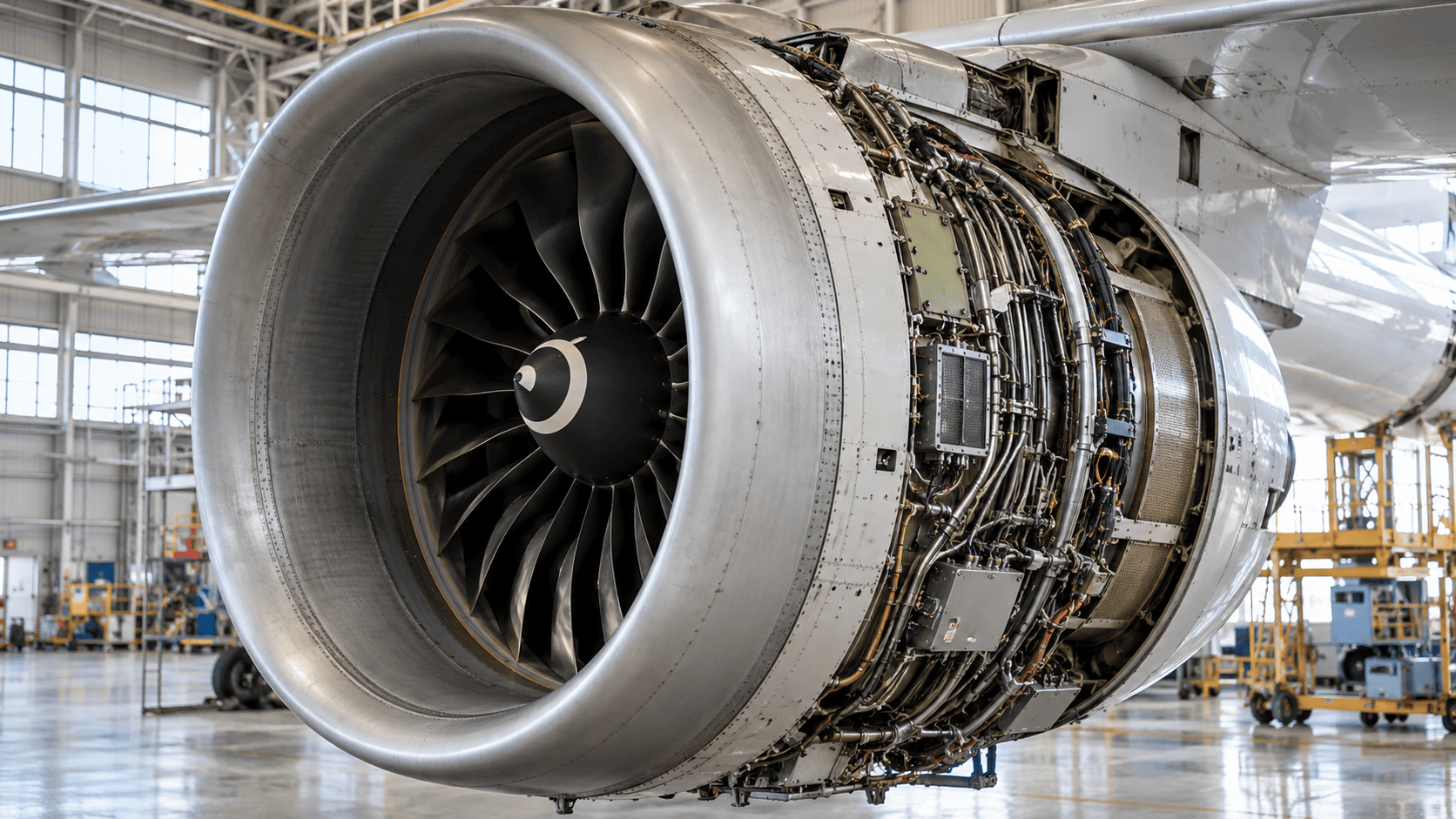
GE Aerospace on Tuesday lifted its 2026 adjusted earnings forecast for the second time this year, citing robust demand for engine repairs and spare parts. However, the stock slipped more than 4% in premarket trading as surging oil prices and concerns over cash flow and airline capacity cuts weighed on investor sentiment.
The company now expects adjusted earnings of $8 to $8.10 per share for 2026, up from its prior guidance of $7.65 to $7.85. Analysts had penciled in $7.94 per share, according to FactSet. GE Aerospace also raised its adjusted revenue growth outlook to between 19% and 20%, compared with its earlier forecast of high-teens growth.

Third-quarter results beat expectations
For the third quarter, GE Aerospace reported profit from continuing operations of $2.41 billion, or $2.32 per share, versus $2.17 billion, or $2.04 per share, a year earlier. Excluding one-time items, earnings came in at $2.25 per share, topping the $2.01 consensus estimate. Revenue rose 16% to $14.12 billion, exceeding Wall Street's $12.88 billion forecast.
The commercial engines and services segment saw a 21% revenue increase, while the defense and propulsion technologies business grew 6.7%. Chief Executive Larry Culp highlighted that orders surged 49% on strong demand, prompting the company to raise its annual outlook. He added that the company now expects 2027 commercial services to grow low-double-digits, supported by a commercial services backlog exceeding $170 billion.
Cost pressures and cash flow weigh on sentiment
Despite the upbeat numbers, several cost pressures tempered the market's reaction. Sales discounts and allowances increased by $1.56 billion, largely reflecting higher allowances for new engine installations and spare parts, as well as product durability reserves in the commercial engines and services business. Margins in that segment fell 10 basis points due to product mix and inflation, while free cash flow declined 14% to $2 billion.
GE Aerospace's insurance operations also swung to a pretax loss of $210 million, compared with a profit of $363 million a year earlier. The company cautioned that supply chain constraints would continue to affect production and customer deliveries, and that inflationary pressures are likely to persist.
Oil price surge raises airline demand concerns
Oil prices climbed sharply on Tuesday, adding to worries about the outlook for airlines and their suppliers. US West Texas Intermediate crude futures jumped 6.58% to around $110.48 per barrel, while Brent crude for December delivery rose 1.94% to $111.67, its highest level since May. The company warned that prolonged high fuel prices could force airlines to reduce flying, potentially weakening demand for engine repairs, spare parts, and spare engines.
Although GE Aerospace said the Middle East conflict had not materially affected its operations through September, airlines worldwide have been cutting costs and capacity to protect profitability after the war in Iran disrupted oil shipping routes and drove up jet fuel prices. Such reductions pose a risk to engine manufacturers because fewer flights could eventually reduce demand for maintenance and replacement parts.
However, airlines continue to hold on to their aircraft, and a backlog of engines awaiting repairs is helping sustain demand for maintenance services. For GE Aerospace, the strong commercial services backlog provides support for near-term growth, even as near-term headwinds from oil prices and cost inflation persist.
This article is for informational purposes only and does not constitute financial advice.