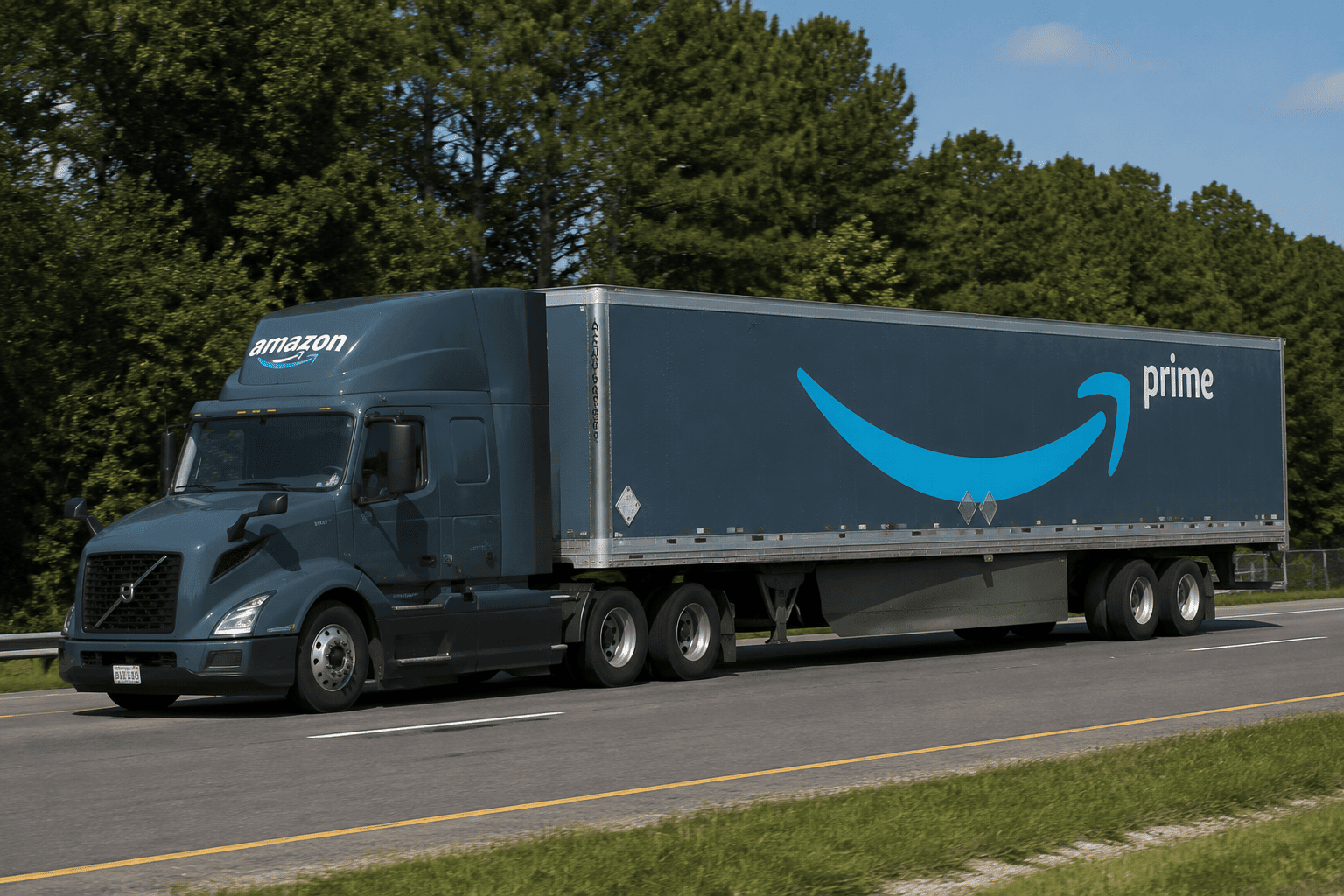
Shares of major less-than-truckload (LTL) carriers fell sharply on Wednesday after Amazon announced it would open its freight service to all customers, intensifying fears of heightened competition. Old Dominion Freight Line dropped over 5%, while XPO, FedEx Freight, Saia, and ArcBest each declined between 3% and 4%.
The move expands Amazon's LTL offering beyond its existing network of merchants shipping goods into its warehouses. The service now handles shipments ranging from one to six pallets, or 150 to 15,000 pounds, supported by roughly 80,000 trailers and 24,000 intermodal containers. Amazon Freight Director Jim Ruiz said the decision was driven by demand from existing customers, who praised the technology, visibility, and reliability of the service.

Investor Concerns Over Growing Logistics Ambitions
Amazon's logistics expansion has long been a source of anxiety for transportation investors. The company has steadily built out warehousing, transportation, and last-mile delivery capabilities, moving well beyond its e-commerce roots. Earlier this year, Amazon's Supply Chain Service platform—offering warehousing, distribution, and delivery—weighed on logistics stocks, including a sharp drop in UPS shares.
The latest announcement reignited fears that Amazon could siphon freight volumes from established carriers. However, several analysts urged caution, arguing the market reaction was excessive.
Analysts: Incumbents Still Hold Key Advantages
Raymond James analysts noted Amazon's impressive scale and continued investment underscore its commitment to freight, but they emphasized that established LTL operators maintain significant advantages. These include extensive terminal networks, pickup-and-delivery capabilities, and decades of operational expertise. "We believe this is not an immediate fundamental disruption, but the risk of a more meaningful competitive threat over time from Amazon is rising," they said.
Bernstein analyst David Vernon downplayed the near-term impact, writing that the "headline bigger than capacity on offer." He argued Amazon's service is not directly comparable to the offerings of traditional carriers. Industry observers also pointed out that Amazon has been expanding its logistics footprint for years without fundamentally disrupting every transportation segment.
While competition is increasing, freight demand continues to grow, allowing room for multiple players to coexist. For investors, the selloff may present an opportunity to reassess the sector, as the market's reaction appears to have outpaced the actual threat. For more on how logistics stocks are navigating broader market trends, see our coverage of Devon Energy's surge and Applied Digital's AI-driven gains.
This article is for informational purposes only and does not constitute financial advice.

