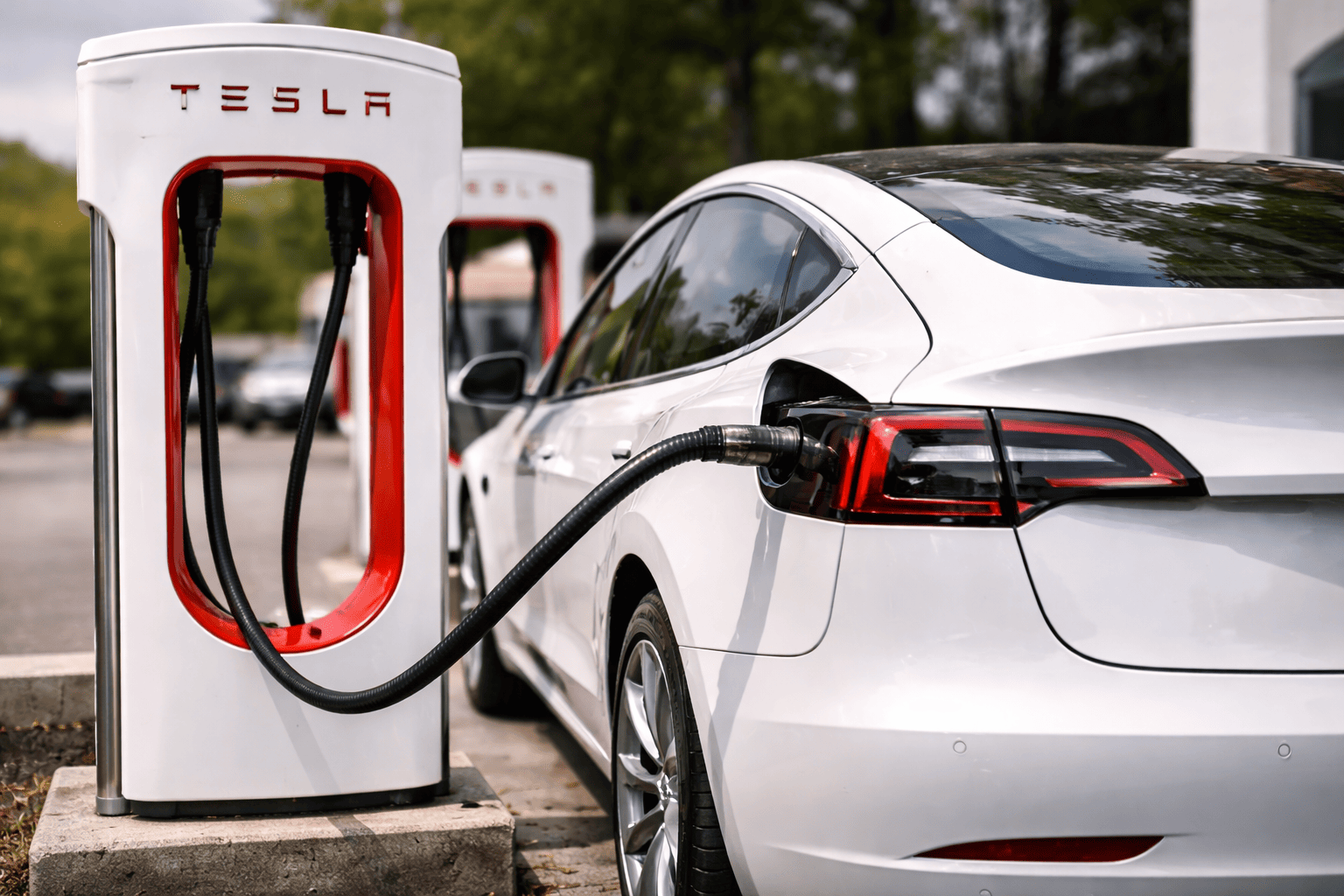
Tesla's stock climbed 5.5% on Monday, closing at $367.95, as investors positioned for Thursday's Cybercab launch event in Austin. The advance extended August gains to roughly 18%, even as the broader market slipped. Despite the recent rally, Tesla shares remain about 18% lower year-to-date in 2026.
The upcoming event is expected to showcase the Cybercab, a purpose-built autonomous vehicle without a steering wheel or pedals, designed to anchor Tesla's robotaxi network. The launch comes at a time when the company's $1.45 trillion market capitalization is under renewed scrutiny, with a significant portion of that value tied to future autonomy revenue that has yet to materialize.
Robotaxis: small revenue, big valuation weight
Morningstar senior equity analyst Seth Goldstein noted on August 18 that robotaxis generated well under 0.5% of Tesla's total revenue in 2025, yet they account for more than 30% of Morningstar's $450-per-share fair value estimate. Goldstein described the Cybercab's integration into Tesla's fleet as "a positive step forward" for its autonomous-driving software.
Morningstar expects the vehicles to have relatively low operating costs and potentially strong margins over time. However, this also raises the bar for Thursday's event, as investors already assign substantial value to profits that barely exist today. A credible launch will need to address deployment timelines, autonomous miles, fleet utilization, operating costs, and the pace at which safety monitors can be removed—factors that are likely to weigh heavily on the valuation debate.
Bulls see another valuation leg
Optimists argue that Tesla's technological advantages can translate into a large commercial network. New Street Research analyst Peter Vogel reiterated a Buy rating and a $600 price target, citing three key robotaxi advantages: low vehicle costs, a flexible supply model, and a massive existing fleet. Vogel also believes Tesla's vertically integrated, camera-based approach could produce structurally lower costs per mile than rival systems.
New Street estimates that robotaxis could eventually generate more than $40 billion in revenue and about $15 billion in EBIT by 2030. Wedbush analyst Dan Ives is even more aggressive, suggesting Tesla could exceed a $2 trillion market value within the next year, with a bull case approaching $3 trillion by the end of 2026 if autonomy and robotics scale successfully. For Ives, execution is the bridge between Tesla's current valuation and another major re-rating.
Execution risk looms large
The risk is that Tesla's autonomy rollout has repeatedly taken longer than some of Elon Musk's earlier forecasts. Barclays analyst Dan Levy remains cautious, pointing to slower-than-expected progress in robotaxi ambitions and the danger that enthusiasm around Cybercab could run ahead of execution. This matters because Tesla's conventional automotive business alone does not justify the valuation investors see across platforms.
Investors are paying a substantial premium for autonomy, artificial intelligence, and robotics, making delays more consequential. Thursday's event does not need to prove Cybercab can immediately become profitable, but investors will want clearer answers on deployment volumes, geographic expansion, unsupervised operations, and autonomous-ride economics.
As the market digests these developments, other tech names are also in focus. For instance, Dell stock shows bearish signals ahead of its earnings, while Broadcom remains a top AI chip pick despite a 25% drop from highs. Meanwhile, Amazon jumped 4% after Evercore lifted its target on AI retail gains, and Adobe stock forms a golden cross as earnings approach.
This article is for informational purposes only and does not constitute financial advice.