Samsung Electronics and SK Hynix shares recovered in early Seoul trading on Thursday, buoyed by Dell Technologies' latest earnings report, which underscored that demand for AI infrastructure remains robust. Samsung rose 1.2% to 253,500 won, while SK Hynix gained 1.5% to 1.637 million won, following a sharp decline on Wednesday when both stocks fell more than 4% amid rising oil prices and Treasury yields.
Dell's shares surged 15.8% overnight after the company reported record AI-server orders and a $95 billion backlog, providing a powerful read-through for Korean memory chipmakers. The results suggest that AI-related spending is still outpacing the supply chain's ability to meet it, a dynamic that directly benefits Samsung and SK Hynix, which are key suppliers of DRAM, NAND, and high-bandwidth memory (HBM).

Dell's backlog points to sustained AI demand
Dell reported second-quarter revenue of $47 billion and adjusted earnings of $7.04 per share, both exceeding Wall Street expectations. The company booked a record $60.9 billion in AI-server orders, generated $16.4 billion in AI-server revenue, and ended the quarter with a $95 billion backlog. Dell also raised its full-year AI-server revenue forecast to $74 billion from $60 billion, signaling confidence in continued growth.
Analysts were quick to highlight the strength. Citi's Asiya Merchant called the quarter a “clear beat” amid “surging” demand, raising her price target on Dell to $600 from $515. Morgan Stanley's Erik Woodring increased his target to $499 from $434, noting that companies are investing heavily in AI across cloud, hybrid, and on-premises environments. He added that “blowout” quarters could persist while supply remains tight and execution stays strong.
Memory constraints remain a key bottleneck
Dell's commentary on supply constraints was particularly relevant for Samsung and SK Hynix. Vice Chairman and Chief Operating Officer Jeff Clarke told investors that the biggest constraints are “DRAM, followed by NAND, NAND,” alongside shortages in other server components. This is significant because SK Hynix is a leading supplier of HBM used with AI accelerators, while Samsung supplies HBM, conventional DRAM, and NAND.
Mizuho analyst Vijay Rakesh said Dell is benefiting from “strong tailwinds” from agentic AI and AI servers, especially when combined with higher-margin storage. Mizuho raised its Dell target to $600 from $500 and maintained an Outperform rating. The persistent memory shortages suggest that the pricing environment supporting Korean memory producers has not dissipated.
Wednesday's selloff was macro-driven
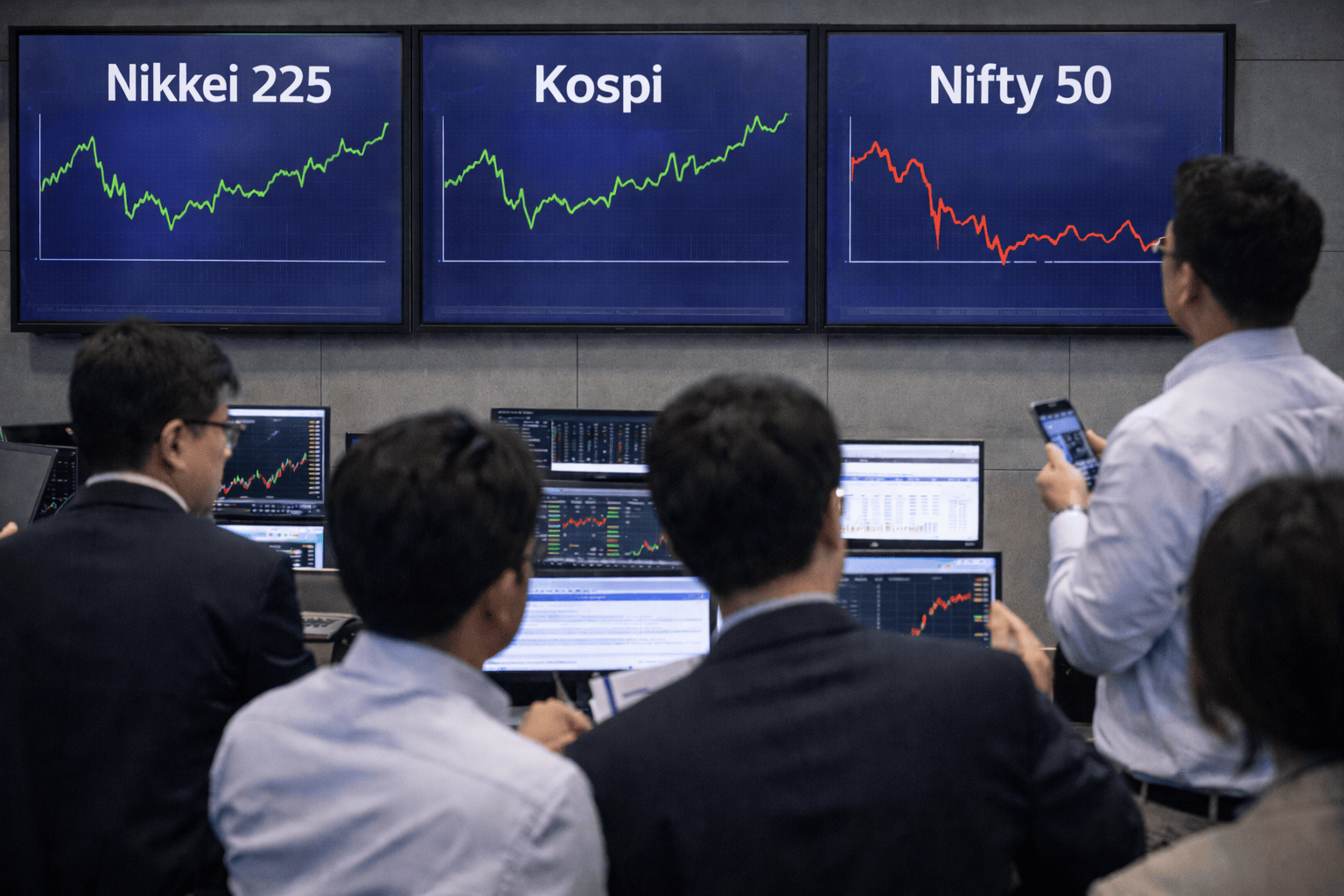
Wednesday's decline in Samsung and SK Hynix was largely attributed to macroeconomic factors rather than company-specific issues. The KOSPI dropped almost 4%, with Samsung closing 4.0% lower and SK Hynix falling 4.7%. Higher oil prices, elevated US Treasury yields, and geopolitical tensions prompted foreign selling across technology shares.
Those pressures eased overnight, with the US 10-year Treasury yield retreating from an intraday high around 4.82%. Nvidia gained 3.2%, and Micron rose 2.4%, reflecting renewed optimism in the AI trade. Kiwoom Securities analyst Han Ji-young told MoneyToday that the recent weakness was unlikely to reflect individual company fundamentals, pointing instead to “a temporary weakening of new buying momentum” amid short-term macro uncertainty. She added that stronger AI-semiconductor sales expectations could improve earnings momentum across leading chip stocks.
While macro risks remain—another surge in oil or bond yields could quickly pressure valuations—Dell's results make one point clear: the underlying AI-memory cycle remains strong. Dell is booking record server orders while naming DRAM and NAND among its biggest constraints, a scenario that bodes well for Samsung and SK Hynix. For investors, the broader AI hardware outlook continues to look supportive, even as short-term volatility persists.
This article is for informational purposes only and does not constitute financial advice.