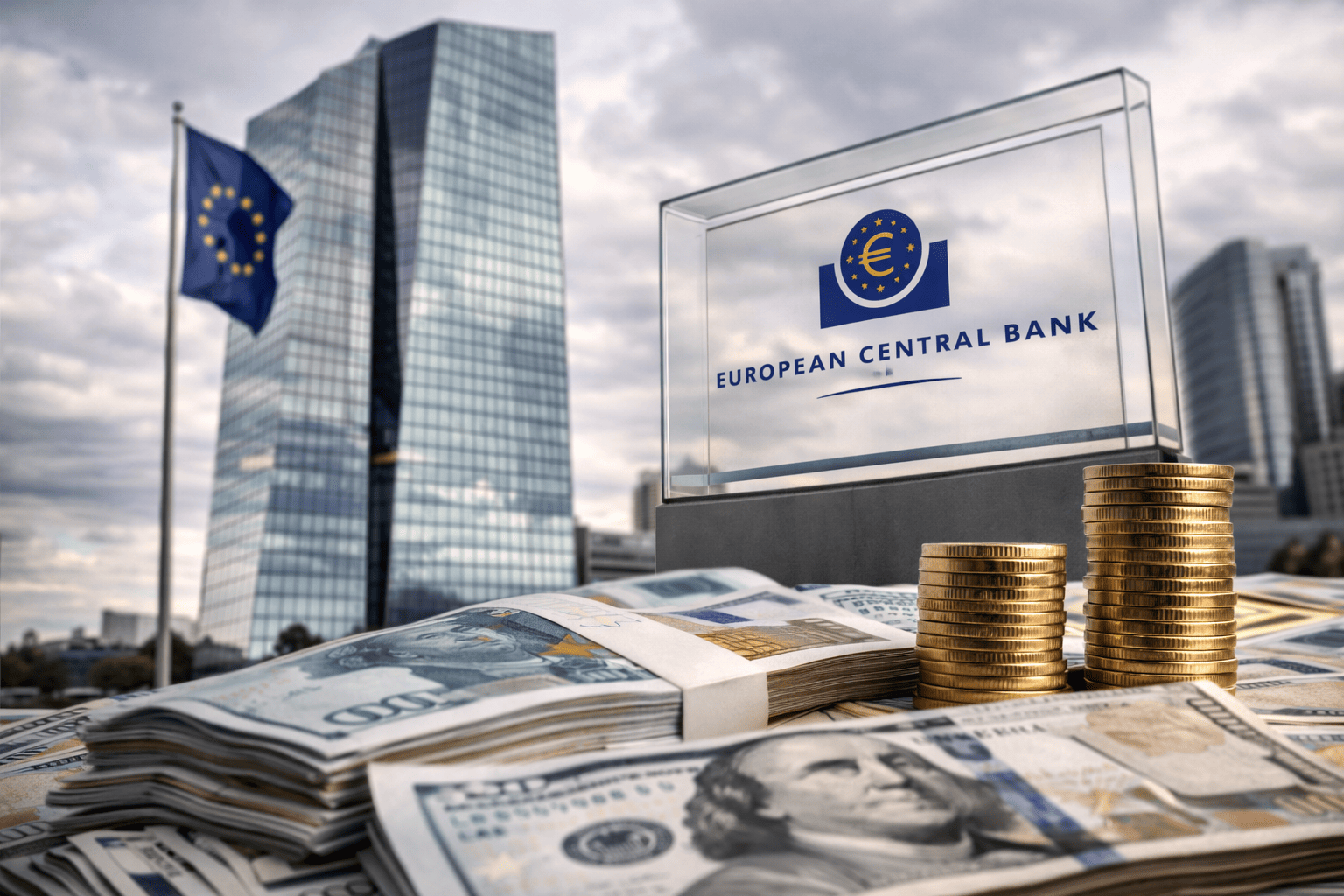
European equity futures traded in a mixed pattern on Wednesday, June 11, as market participants turned their attention to the European Central Bank's (ECB) upcoming interest rate decision. The German DAX futures declined by 80 points to €24,160, representing a drop of nearly 6% from the index's 2025 high. In contrast, futures linked to France's CAC 40 and the broader Euro Stoxx 50 edged higher, mirroring modest gains in U.S. index futures after Wednesday's sell-off.
ECB Expected to Deliver 25-Basis-Point Hike
The ECB is widely anticipated to raise its key interest rate by 25 basis points, according to a Reuters poll of economists. This move would mark the first rate increase of the year, driven by persistent inflationary pressures. Eurozone headline consumer price inflation accelerated to 3.2% in May, up from 3.0% in April, and well above the bank's 2% target. Core inflation, which excludes volatile food and energy prices, also climbed to 2.5% in May from 2.2% in April, signaling that underlying price pressures remain sticky.
The expected rate hike represents a significant policy reversal for the ECB, which had been on a dovish trajectory earlier in the year. The central bank had previously cut rates from a peak of 4.5% in 2024 to the current 2.15% before the recent inflation uptick forced a reassessment. Polymarket traders now anticipate a more hawkish stance from ECB President Christine Lagarde in the post-decision press conference.
Bond Yields Surge Across Europe
The shift in rate expectations has driven European government bond yields sharply higher in recent weeks. Germany's 10-year Bund yield rose to 3.076%, its highest level since 2011. France's 10-year OAT yield climbed to 3.732%, a level not seen since 2009. Similarly, yields on Spanish and Italian 10-year bonds reached 3.53% and 3.86%, respectively. All of these levels represent substantial increases from their 2025 lows.
Higher interest rates typically weigh on equity valuations by increasing corporate borrowing costs and reducing the present value of future cash flows. Sectors with high debt levels, such as real estate and utilities, are particularly sensitive to rising rates. For context on how individual stocks are reacting to the current environment, see our coverage of Microsoft Stock Slips 1.5% as Analysts Trim Targets Ahead of Q4 Earnings and Alphabet Stock Dips 2% on Gemini 3.5 Pro Delay, Yet Analysts Remain Bullish Ahead of Earnings.
Geopolitical Tensions Add to Uncertainty
European indices are also contending with escalating tensions between the United States and Iran. Overnight, the U.S. launched strikes against Iranian targets, prompting a retaliatory response from Tehran. The conflict has kept crude oil prices elevated, with Brent crude trading near $94 per barrel and West Texas Intermediate (WTI) around $90 per barrel.
According to a report from Axios, the Trump administration is considering a more sustained military campaign to pressure Iran into a diplomatic agreement. Such an escalation could provoke Iran to disrupt shipping routes, including the Red Sea, through which approximately 12% of global crude oil transits. Any disruption would likely push energy prices higher, adding to inflationary pressures and further complicating the ECB's policy path.
The combination of tighter monetary policy and geopolitical risk creates a challenging backdrop for European equities. Investors are closely watching the ECB's forward guidance for clues on the pace of future rate moves. For a broader perspective on how currency markets are reacting, see US Dollar Weakens as Traders Eye PPI Data and Bank of Canada Decision.
As the ECB decision approaches, the DAX, CAC 40, IBEX 35, and Stoxx 50 remain under pressure from both domestic and external headwinds. Market participants will parse the central bank's statement and Lagarde's comments for any signals on the duration and magnitude of the tightening cycle.
This article is for informational purposes only and does not constitute financial advice.